

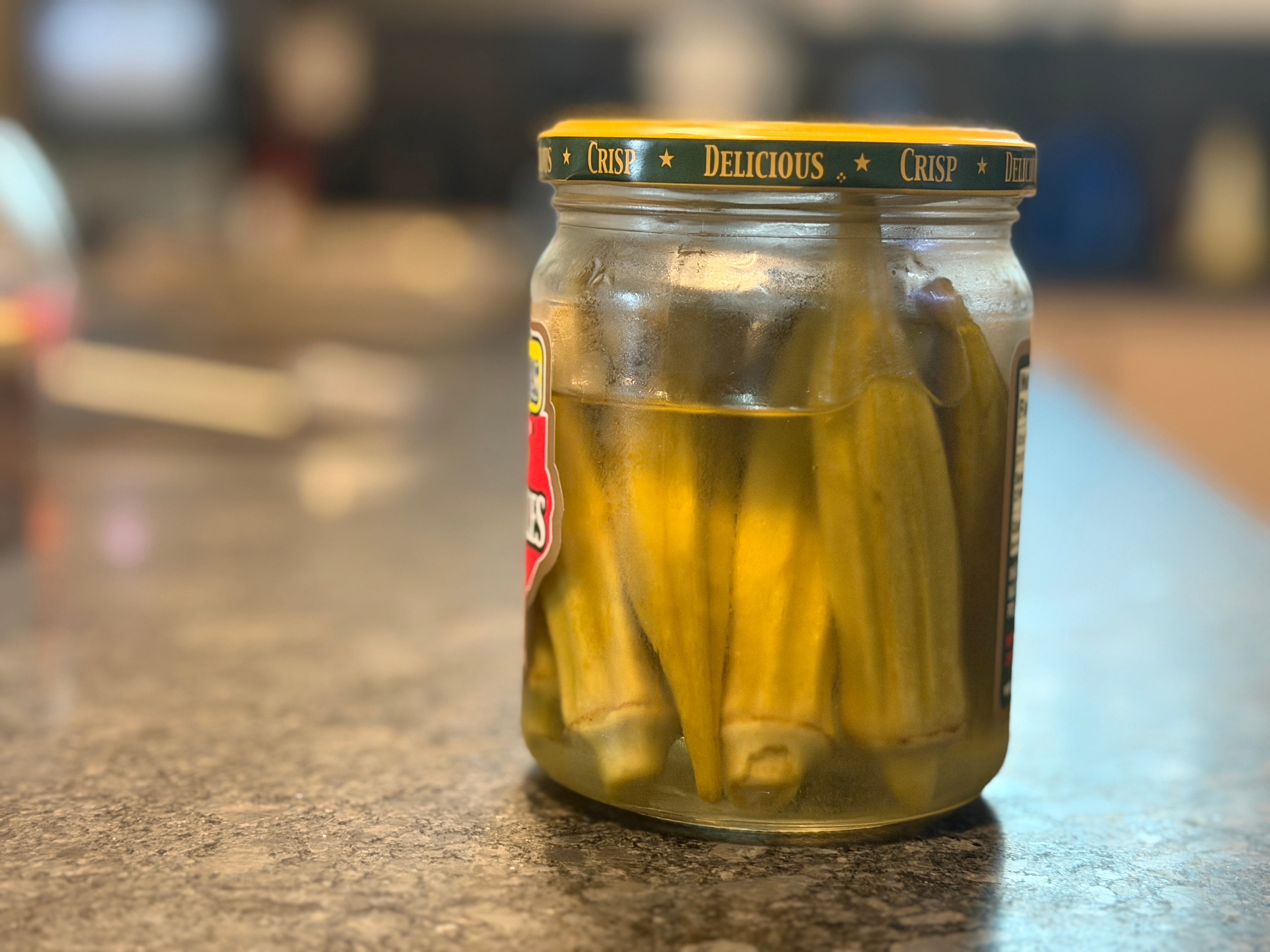
Bean tried to have pickled okra for dinner one night. Not as a side. As the dinner. She pulled the jar out of the fridge, set it on the counter, lined the okra up on a napkin, and started eating. I told her she couldn’t have pickled okra for dinner. She argued briefly and gave in. We moved on.
The very next night I was picking the girls up from their separate practices and I said we were having Taco Tuesday. Bean announced she didn’t like tacos. Savannah, without looking up, said: you could always have pickled okra.
Bean did not find this funny.
I found it very funny. It was a perfect joke. Callback, good timing, true. Bean had laughed about the pickled okra herself the night before. Now she was offended. She said we were picking on her.
That’s when the car became a classroom.
Growing up, we played the dozens. Weekends mostly, watching TV, going back and forth. They weren’t kind jokes. Someone might tell you your forehead was big or your lips were too big or your mama was so fat. You learned to take it or you cried, and crying made it worse. So you learned. You learned to hear something that stung and let it land and let it go. Sometimes you learned that the thing they said was true and that it didn’t actually matter as much as you thought. The big lips were fine. You were fine.
I’m not saying kids should talk to each other that way. That’s not the point. The point is the muscle it built. The ability to hear something unflattering and not shatter. The ability to laugh at yourself when the situation earns it.
That muscle is hard to find now. Someone says the wrong thing and suddenly the whole room has to adjust. You’re supposed to know in advance what’s going to land wrong. You’re supposed to read the mood before you open your mouth.
I told the girls: you can’t decide when the joke is funny. If a stranger says something that lands wrong, you learn to shake it off. That’s the muscle. Bean thought the pickled okra situation was funny on Monday. She stopped thinking it was funny on Tuesday when she was the subject. That’s not how it works.
Savannah said: but you’re not a stranger. We’re supposed to love each other.
I said: loving someone doesn’t mean you stop telling jokes. It means the jokes come from a different place.
You don’t have to fight on the terms someone else sets. You get to decide what’s actually worth responding to.
Thick skin isn’t callousness. It’s not permission to be cruel. It’s the ability to hear something and stay standing. To know the difference between someone who’s taking a shot at you and someone who’s laughing with you. To know that being laughed at occasionally is survivable, and sometimes it’s even good for you.
The pickled okra thing was funny. Bean knew it was funny. The proof is that she was still talking about it the very next day, which is how it became the setup for Savannah’s line in the first place.
She’ll get there. She’s twelve. Taco Tuesday at the house will do for now.
That’ll work too.