

Wayne used to ask the men on our weekly call a question that had no good answer.
If I told you I’d give you a million dollars to make this call, would you make it?
Every man said yes. Of course. You’d cancel dinner reservations. You’d leave a soccer game. You’d move mountains for a million dollars.
Then why, he’d ask, is a soccer game enough to miss it?
I’ve been thinking about that question for over a decade. He wasn’t saying the call was worth a million dollars. He wasn’t saying men’s work should rank above a soccer game. He was pointing at the exits. We build them ourselves, and we make them reasonable.
We say the people we love are the priority. Then we let a scheduling conflict feel like a reason to disappear. We say our word means something. Then we find an exit when keeping it gets inconvenient. The exits are always reasonable. That’s what makes them exits.
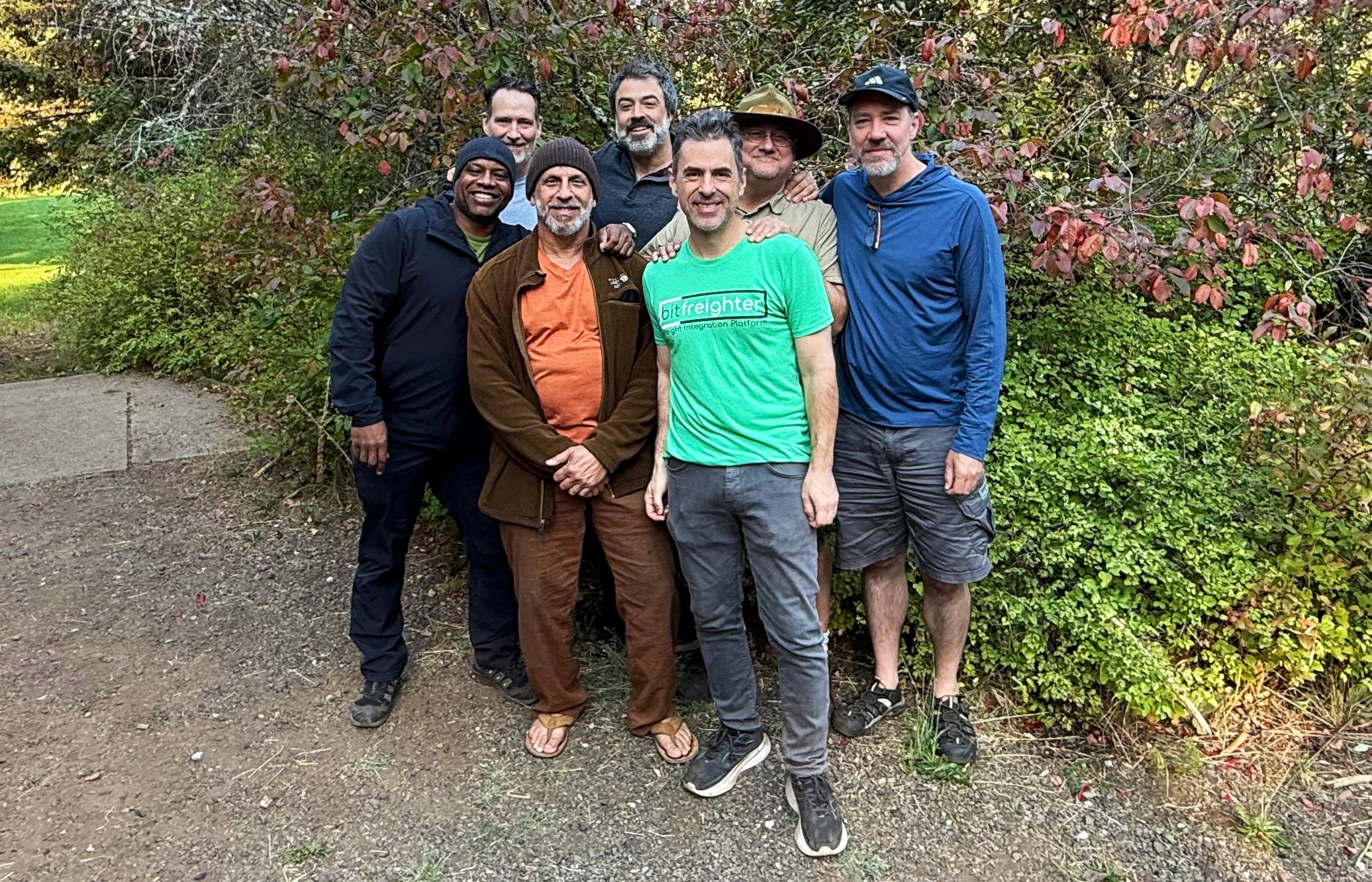
At BetterMen, accountability has a shape. We hold formations at specific times. If a man is late, the circle stops and he stands in the middle of it. The other men, twenty or thirty of us, form a ring around him. Then he does the silly.
The silly has three rules. Don’t touch anyone. Give 100%. Don’t quit.
Picture a grown man running around the inside of a circle, full speed, screaming gibberish at the top of his lungs, flailing his arms, kicking his legs, making faces, being a complete idiot. Ten seconds. There’s no timer, just feel. By the end he’s exhausted in a way ten seconds shouldn’t make a man. I remember one who did it quietly. He had to do it again.
The silly isn’t punishment. Punishment would be the wrong shape. The silly is a way to flatten the ground again. The man who showed up late absorbs a small public cost so the men he kept waiting don’t have to carry it. He doesn’t owe an apology. He owes his body. He pays in laughter. Then everyone moves on.
I learned a kind of accountability there I hadn’t seen anywhere else. The Marine Corps had formations, and the accountability there was different. Colder, transactional, on the books. The men’s work teaches an accountability that doesn’t require punishment. It requires showing up where you said you would, and when you didn’t, taking the cost in front of the people you let down.
Commitment isn’t a feeling. It’s a decision you make in advance so you don’t have to make it again when it gets hard.
That’s the whole thing. That’s the million dollar question.
When you decide in advance, you stop negotiating with yourself. The retreat is in September. I’ll be there. There’s nothing to weigh, nothing to talk yourself into or out of. The decision is already made. All you have to do is show up.
When you don’t decide in advance, every commitment becomes a fresh negotiation. And you will lose that negotiation more often than you think, because the opposition always has a reasonable argument. I’m tired. There’s a work thing. The kids need me. I’ll make the next one. The opposition isn’t wrong, exactly. It’s just that if you listen to it long enough, you end up a man who doesn’t keep his word, and you got there one reasonable excuse at a time.
Wayne’s question wasn’t really about the call. It was about the pattern.
How you show up in one place is how you show up everywhere. The man who finds it easy to skip is practicing something. He’s practicing the skill of deciding his commitments are negotiable. That skill shows up at work, in relationships, with his kids. Not because he's a bad man. Because that's what he's been practicing.
The inverse is also true. The man who keeps his word on the small things, the standing appointment, the formation at the agreed-upon time, the promise he made on a Tuesday to his ten-year-old, is also practicing something. He’s practicing being the kind of man whose word means something. That practice compounds.
Sometimes something genuinely outranks the commitment. A health emergency. A kid in crisis. The actual fire. You handle it, you come back, and the practice resumes. That’s not the failure mode.
The failure mode is when the thing pulling you away doesn’t outrank the commitment, but you let it feel like it does. The friend in town. The work thing that could wait. The pull in those moments is real, but the priority hasn’t actually changed. You’ve just decided you’d rather be somewhere else, and you’re letting the feeling do the work of a real reason.
When that happens, the deviation is data. Not about the commitment. About you. The question isn’t whether you broke your word. The question is what you were running from. The work asks you to look at yourself. The friend lets you not look. The cost of the avoidance is the work. The cost of the work is the avoidance. Pick.
I still make the retreats. Not because I have nothing else going on, and not because they always rank as the highest priority on any given week. Sometimes they don’t. But I’ve stopped letting things that don’t outrank them feel like they do.
That discipline has shown up everywhere else. In how I parent. In how I work. In what I’m willing to put my name on and what I’m not.
September 10 through 13. Washington State. I’ll be there.
Wayne asked the question once. I’ve been answering it ever since.
Ready to do the work? Start here.