

A grown man I had never met let himself into my house with the door code while my girlfriend was telling me she thought something was wrong with her.
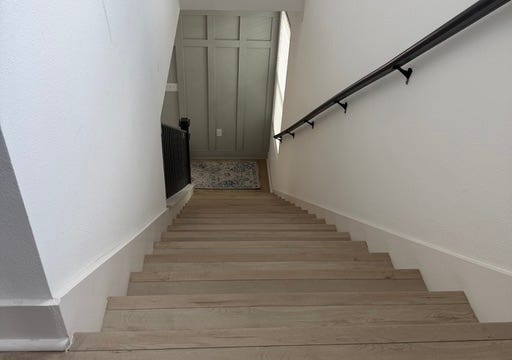
She’d been to the doctor that morning. Paid out of pocket, which tells you how bad she felt. I was upstairs working. She came in and stood at the bottom of the stairs and started talking about her day, and I turned my chair around and listened, because she’d just come from a doctor and that’s what you do. She told me what they said and what they wanted to run next. She said she knew something was wrong or she wouldn’t have gone.
Then the front door opened. The old pest guy is gone. The new one had the code and no instinct to text first. He was on time, to be fair to him. However, he just walked in. Both of us jumped, I went down to deal with it, and the conversation ended the way most important conversations end, which is not at all. It just got walked away from.
I didn’t bring it back up. She did, that night, after I got home from choir practice. It came in sideways, after I’d just told her I needed a couple of catch-up days. Nights she doesn’t come over, so I can put the house back together. She said sure, and then said she knew she needed the next test but she was scared to find out what it was.
I said, “Yeah. It’s scary.”
That was it. That was the whole response.
I replayed both conversations the next morning, which is a thing I do, and I didn’t like what I found.
In the afternoon, when she said she knew something was wrong, I told her that her body was telling her something. True. Then I asked what she thought it was, and she gave me the clinical list, the one she’d already built in her own head, and I started asking when it started and what we’d done different and whether it was the weekend. Useful. We were working the case inside ninety seconds.
In the evening, when she said she was scared, I said it was scary. Then I said she’d been powering through and hadn’t had a choice. Then I said it was common.
Every one of those sentences is true. I didn’t say a wrong thing in either conversation. And none of it did the job, because she wasn’t handing me a fact to confirm. She was handing me a feeling, and I kept handing back accurate statements about the feeling.
I’ll say the uncharitable part, because it was in the room. I was working. I have a thing about people who capitalize on my time without acknowledging it. The ones who never say “I know you’re busy, I just need two minutes” and instead just start. And Jess, when she’s wound up, talks in one long run. She’ll ask a question and be three thoughts past it before you can answer, so the answers pile up unspoken and eventually you stop making them.
Some of that was happening. I noticed it. And it doesn’t justify a thing. She’d just come from a doctor. That’s the whole analysis.
A question costs you something a statement doesn’t. When you tell someone it’s scary, you’re done. You’ve named it, you were right, and the next move is theirs. When you ask what exactly she’s afraid of, you have to stand there not knowing what she’ll say. She might say the word she’s been avoiding. She might cry. She might say something that makes you realize you can’t fix it, and the whole reason you were talking in diagnostic mode is that diagnostic mode has a next step and fear doesn’t.
I know this. I’ve known it for fifteen years. The men’s work is built on it. This past mens weekend a man was in the hot seat, starting to go somewhere hard, and another man jumped in to rescue him. Softened it, reassured him, tried to pull him back from the edge he was walking toward. The circle called it. Not because the rescue was unkind, but because of where it came from. He wasn’t protecting the man in the seat. He was protecting himself. He’d want someone to pull him out if he were the one sitting there, so he pulled.
We have a word for it. Mothering.
Don’t fix. Don’t advise. Don’t mother. Ask the next question and let the silence work.
And in my own house, with the person who’s here most nights, the first thing out of my mouth was “it’s so common.”
Here’s what I think I was protecting. If she says the word, I have to hold it. Not solve it. Hold it. And I’m very good at holding things by carrying them somewhere and setting them down, which is what the timeline questions were. Carry it over to Saturday, set it down at Costco. I’m much less practiced at holding a thing while it’s still in her hands. Reassurance is the respectable way to end a conversation you’re not sure you can stay in. It looks like care. It’s exit. I rescued her the way that man rescued his brother, and for the same reason.
What bothers me most isn’t that I did it. It’s how clean my memory of it was. I remembered asking her what she thought it was. I didn’t remember what I said first. Left alone, I’d have told myself I showed up fine. The replay is the only reason I know I didn’t.
I haven’t gone back to her with the version I should have asked. I’m going to. Something like: the other night you said you were scared to know what it is. I said it was scary and then I changed the subject. What is it you’re scared of?
And then I’m going to not say anything for a while, which is the part I’m actually bad at.
The pest guy comes back in a month. I’ve asked him to text me before walking in.